· 4 min read
Exhibition Stand Games: Why a Prize Wheel Pulls Visitors In
Exhibition stand games solve a problem every exhibitor knows: hundreds of people walk past, but very few stop. Visitors at a busy trade show are tired, carrying bags and trying not to be sold to. A prize wheel gives them a low-pressure reason to step onto your stand, and gives your team a natural opening line. This article explains why it works and how to set it up so the spins lead somewhere useful.
Why a prize wheel works on a stand
Most stand activities ask visitors for something before they get anything back – a business card, a demo slot, ten minutes of their time. A prize wheel reverses that. One spin takes a few seconds, everyone understands it instantly, and there is a small reward at the end.
It also works as a beacon. The movement of a spinning wheel and the clicking of the pegs catch attention from several aisles away, and a small group gathering to watch is the best advert a stand can have. People are drawn to where other people are already having fun.
- Instant understanding – no rules to explain, no app to download.
- Short dwell – a spin is quick, so queues move and nobody feels trapped.
- Visible from a distance – especially a giant or illuminated wheel.
- Brandable – the face, column and header can all carry your artwork.
Choosing a wheel for the show floor
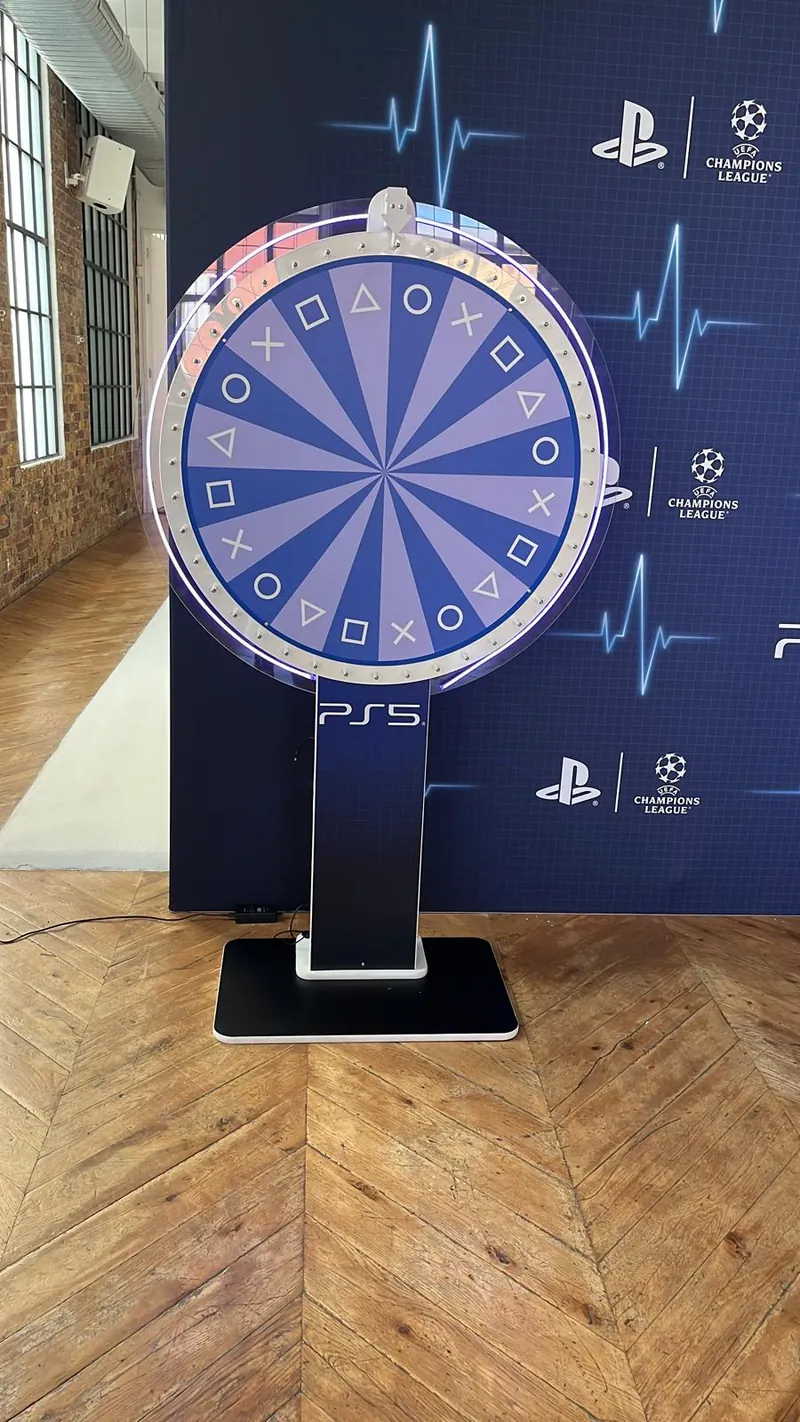
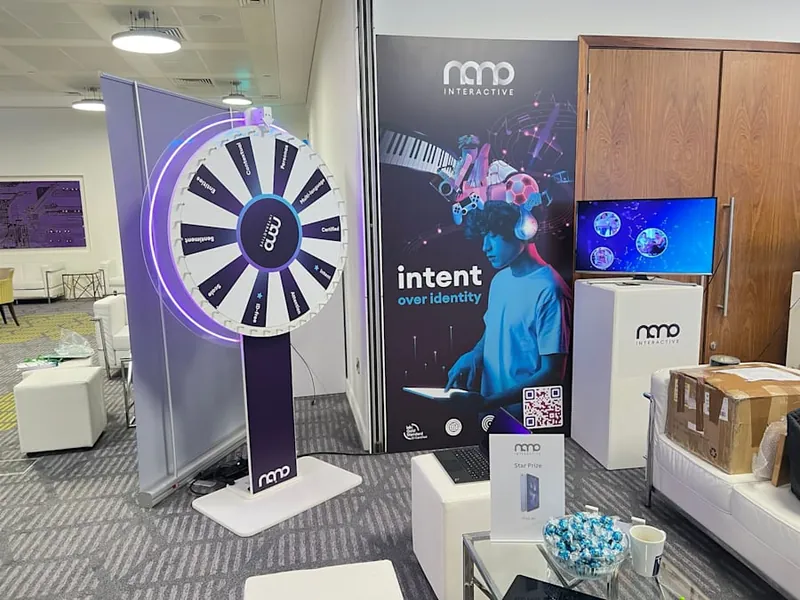
The right wheel depends on your stand size and the hall. At large venues such as ExCeL London, the NEC or Manchester Central, sightlines are long and ceilings are high, so height pays off. A 120cm Pro wheel, standing over two metres tall, can be spotted well down an aisle. A wheel with a "Spin to Win" header panel tells visitors exactly what to do before they arrive.
On a compact shell-scheme stand, a table-top wheel sitting on your counter keeps the floor clear. If you want lights and sound, the digital wheels and Vault need one 240v socket – book stand power with the organiser early. The full exhibition prize wheel range shows every option.
Stand layout tips
Where you put the wheel matters as much as which wheel you choose.
- Front corner, not back wall. Place the wheel close to the aisle so visitors can play without fully committing to entering the stand.
- Leave room to queue. Allow roughly 1.5m × 1.5m for a floor-standing wheel and its player, plus space for two or three people waiting, without blocking the aisle.
- Angle it inwards. Turn the wheel slightly so that players face into your stand and toward your graphics and staff.
- Keep prizes visible. A small display of the top prizes beside the wheel gives people a reason to try.
- Check the organiser's rules. Some halls have rules about activity encroaching on aisles, so keep the wheel inside your footprint.
Staffing the wheel
A wheel left unattended is just decoration. Ideally one person owns the wheel: welcoming players, managing the queue and handing over prizes. That frees the rest of the team to have the deeper conversations.
If your team is stretched, staff can be added to run the wheel and the queue, so your own people stay focused on visitors who want to talk business. Agree a simple handover signal in advance – for example, the wheel host introduces any player who asks a product question to a named colleague.
Turning spins into conversations
The spin is the icebreaker, not the goal. A few simple tactics help convert it into something measurable.
Ask one question per spin
While the wheel slows, ask something light but relevant: "What brings you to the show?" or "Are you working on anything in this area?" The answer tells you in seconds whether this is a lead.
Use segments that start a chat
Mix branded giveaways with segments such as "Free consultation", "Book a demo" or "Enter the prize draw". These give your team a reason to continue the conversation.
Capture details fairly
If you want contact details, ask clearly and explain why. Many exhibitors offer the spin to everyone and invite people to leave details for a bigger end-of-show prize, which keeps the experience friendly.
Debrief daily
At the end of each day, note which prizes ran low and which questions produced the best conversations, and adjust the next morning.
Regional shows and smaller events
Exhibition stand games are not just for the big national halls. Regional business expos, conferences with a small exhibitor area and careers fairs all benefit. If you exhibit in the Midlands, for example, see exhibition prize wheel hire in Birmingham for local details. JM delivers, sets up and collects UK-wide, so the crew handles build-up and breakdown around the venue's schedule.
Book for your next show
Exhibition dates fill quickly, especially in the busy spring and autumn seasons. Check your show dates on the availability checker or ask for a quote with your venue and stand size, and the team will suggest the best wheel for your space.